
They call it BS Jade — it’s just Black Sheep Jade
The Stone of Heaven
What is Jade?
Known throughout history as “The Stone of Heaven,” jade is an umbrella term used to describe two distinct gem materials: nephrite, an amphibole aggregate, and jadeite, a pyroxene mineral.
Those two materials are not varieties of one another. They come from different mineral families, they are built from different crystal architectures, and they arrive at their colors by different chemical routes. Almost every disagreement about jade begins with somebody not knowing which of the two is in their hand.
What follows is a composition-first look at both: what each stone is actually made of, which minerals do the work, and why the purest jade of either kind has no color at all.
- Nephrite
- AmphiboleTremolite–actinolite series
- Jadeite
- PyroxeneJadeite–omphacite–kosmochlor
- Shared name
- JadeA trade umbrella, not a species
Part one
The Composition of Nephrite
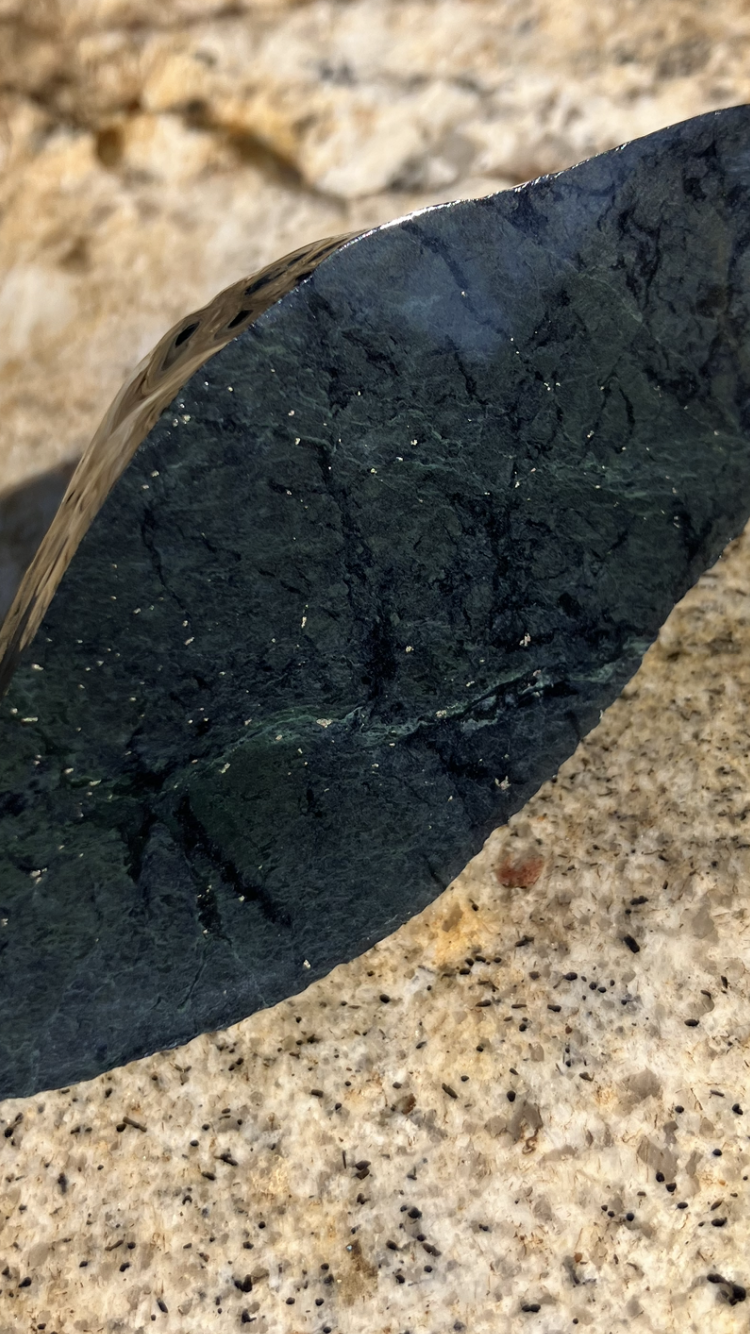
Nephrite consists primarily of interlocking amphibole minerals of the tremolite–actinolite series. The lightest nephrite is typically rich in tremolite, while increasing iron toward the actinolite–ferro-actinolite end of the series generally produces darker green to black material.
Tremolite acts as the foundational mineral; pure tremolite is a white, magnesium- and calcium-rich material. As iron increasingly substitutes for magnesium, the amphibole composition progresses from tremolite toward actinolite and, at still higher iron contents, ferro-actinolite.
Up to 40 different mineral inclusions and accessory minerals can naturally be present within the remaining structure. Some of the most common include:
- Magnetite
- Chromite
- Epidote
- Garnet
- Thulite
- Titanite
- Serpentine
- Talc
- Rutile
- Diopside
For example, prized Asian “mutton-fat” nephrite consists of an ultra-pure 95% to 99% tremolite matrix. Conversely, the deep, near-black nephrite deposits found in Asia (such as Guangxi) and Wyoming, USA, are heavily iron-dominated, measuring roughly 90% to 95% actinolite and/or ferro-actinolite.
Ultimately, a nephrite stone’s final color is strongly influenced by the proportions and chemistry of these amphiboles.
- Mutton-fat nephrite
- 95–99%Tremolite matrix
- Guangxi & Wyoming black
- 90–95%Actinolite and/or ferro-actinolite
- Standard specific gravity
- 2.88–3.03SG
- Iron-heavy outliers
- up to 3.405SG, per gemological testing authorities
The specific gravity of standard nephrite ranges between 2.88 and 3.03 SG, though exceptionally dark, iron-heavy specimens analyzed by gemological testing authorities have reached densities up to 3.405 SG.
Jadeite-bearing jade can occur within a pyroxene solid-solution system involving jadeite, omphacite, and kosmochlor. The proportions and chemistry of these pyroxenes, together with trace elements and accessory minerals, contribute to jadeite’s final color.
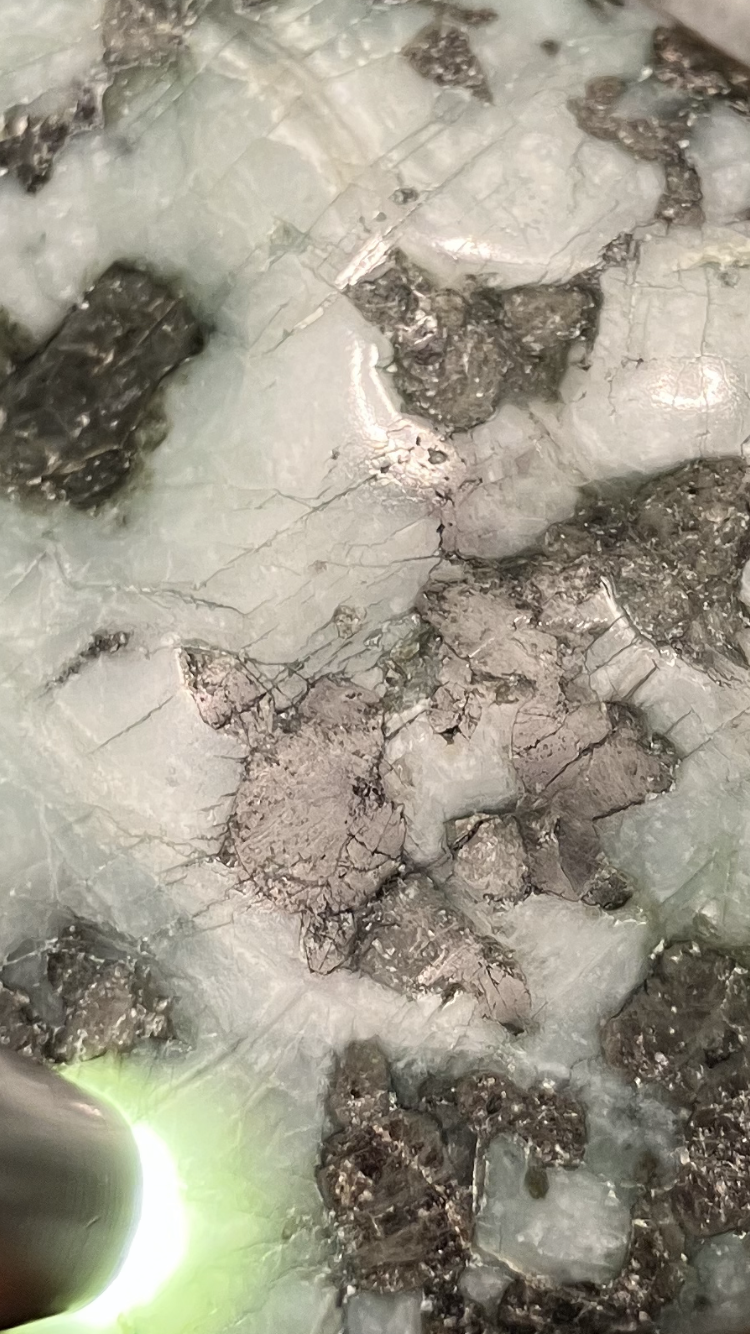
Gem-quality jadeite is predominantly composed of jadeite, with accessory minerals such as omphacite, albite, amphibole, and chromite. In pyroxene nomenclature, approximately 80 mol.% jadeite is an important compositional boundary separating jadeite-dominant material from omphacite.
The remaining balance consists of minor accessory minerals and structural inclusions, which commonly include:
- Albite
- Zoisite
- Garnet
- Mica
- Quartz
- Omphacite
- Amphibole
- Chromite
- Solid-solution system
- Three end-pointsJadeite · omphacite · kosmochlor
- Nomenclature boundary
- ~80 mol.%Jadeite-dominant above; omphacite below
- Pure end-member
- NaAlSi2O6Colorless sodium aluminum silicate
Part two
The Composition of Jadeite
The three pyroxenes
- Jadeite — the sodium-aluminum end-member, colorless when pure.
- Omphacite — the calcium-magnesium-bearing neighbour; below roughly 80 mol.% jadeite the rock takes its name.
- Kosmochlor — the chromium-bearing member, and the source of some of the most vivid greens in the family.
Part three
The Secret of Color: Pure vs. Included Jade
A fascinating truth of the gem world is that in their absolute purest forms, neither stone possesses any colored pigment.
When nephrite closely approaches its tremolite-rich end-member, it presents as entirely white, while a pure jadeite end-member is completely colorless.
Pure nephrite
When nephrite nears its pure tremolite end-member, its tightly tangled crystal fibers naturally scatter light, giving it a creamy, opaque-to-translucent look resembling solid milk glass or rich lard.
Pure jadeite
Pure jadeite is colorless sodium aluminum silicate (NaAlSi2O6); natural gem-quality jadeite, however, commonly occurs as a fine-grained polycrystalline aggregate. In its pure end-member composition, jadeite is colorless, allowing light to pass through its crystalline structure and giving it a watery transparency known in the luxury trade as “Ice Jade.”
What paints the stone
Therefore, it is the presence of chemical substitutions, trace elements, and mineral inclusions that paints both materials.
When iron substitutes into the tremolite matrix of nephrite, it shifts the amphibole composition toward actinolite and ferro-actinolite, systematically driving the stone into deep greens and ink blacks.
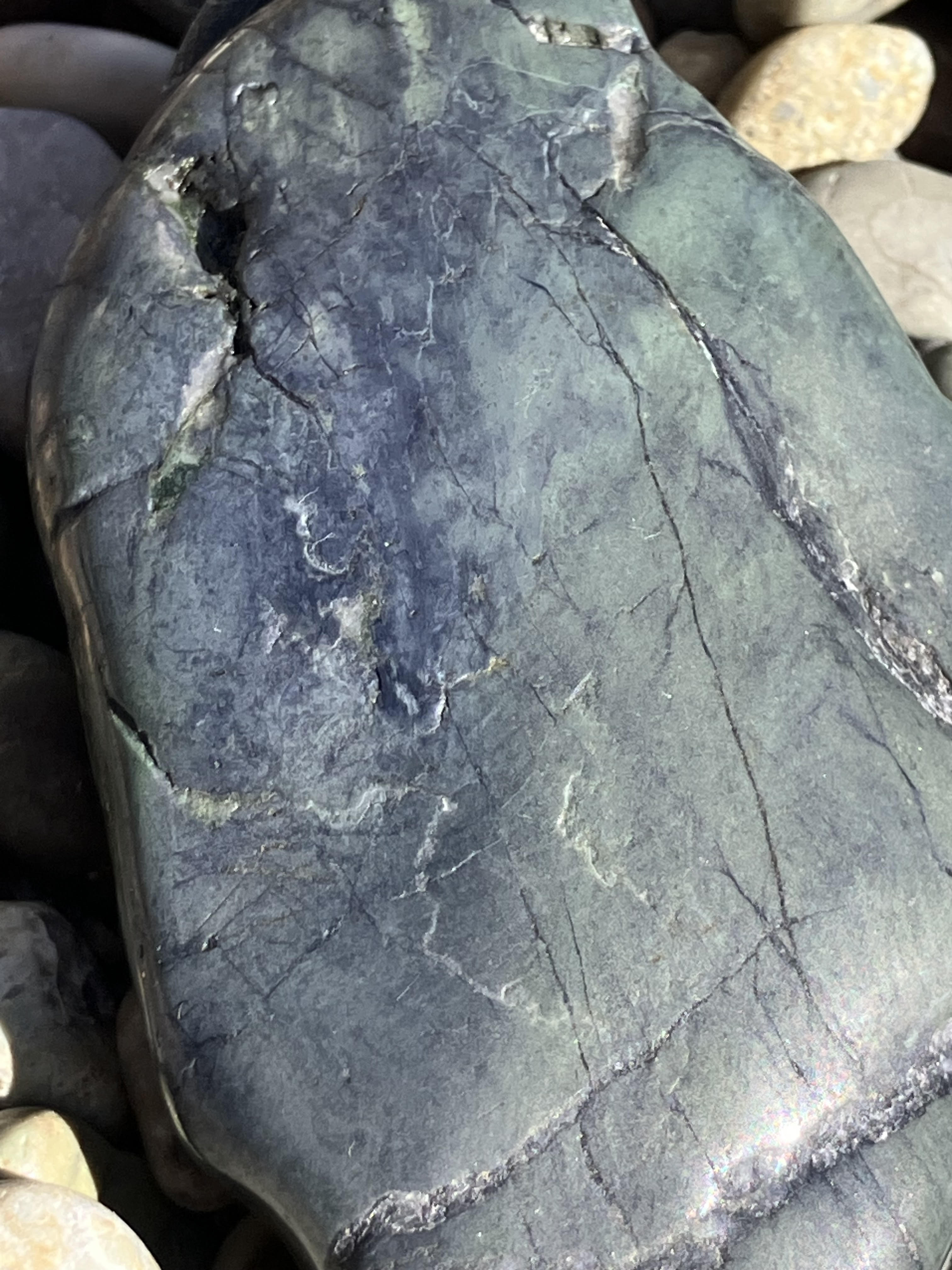
When chromium, iron, or manganese enter the pyroxene structure of jadeite — alongside inclusions of dark micas, quartz, green omphacite, or vibrant kosmochlor — they paint the stone with its legendary palette of vivid emerald greens, deep lavenders, icy blues, and rich charcoal hues.
Without these chemical variations and structural features, the vibrant world of colored jade would not exist.
Reference
Nephrite and jadeite, side by side
| Property | Nephrite | Jadeite |
|---|---|---|
| Mineral family | Amphibole aggregate | Pyroxene |
| Series / system | Tremolite–actinolite–ferro-actinolite series | Jadeite–omphacite–kosmochlor solid solution |
| Pure end-member | Tremolite — white, magnesium- and calcium-rich | NaAlSi2O6 — colorless |
| Structure | Interlocking, tightly tangled crystal fibers | Fine-grained polycrystalline aggregate |
| Color driver | Iron substituting for magnesium | Chromium, iron, manganese, plus included pyroxenes |
| Pure appearance | Creamy and opaque-to-translucent — milk glass, lard | Watery transparency — the trade’s “Ice Jade” |
| Hardness (Mohs) | 6 – 6.5 | 6.5 – 7 |
| Specific gravity | 2.88 – 3.03 standard; up to 3.405 in iron-heavy material | 3.30 – 3.38 typical |
| Refractive index | 1.600 – 1.627 · spot 1.61 | 1.652 – 1.688 · spot 1.66 |
| Polished luster | Greasy, oily, waxy | Vitreous to sugary, often dimpled |
| Broken surface | Splintery and fibrous | Granular, with visible interlocking grains |
| Common accessories | Magnetite, chromite, epidote, garnet, thulite, titanite, serpentine, talc, rutile, diopside | Albite, zoisite, garnet, mica, quartz, omphacite, amphibole, chromite |
Next
Recognizing them in nature
Composition explains what the stones are. It does not help much when you are standing in a creek bed holding a water-worn boulder with an oxidized rind. The field guide covers the checks that do work outdoors, in the order worth running them.
How to tell them apart in the field
Heft, the tap test, hardness, fracture surfaces, backlighting, weathering rinds and locality — plus the confirmations that need a bench.
Read the field guide →The lookalikes
Serpentine, vesuvianite, hydrogrossular, prehnite, chrysoprase and dyed quartzite — what gives each of them away.
See the table →Treatment codes
What A-, B- and C-jade mean, and the signs of bleaching, polymer impregnation and dye.
A, B and C →The house position
One big blended happy jadeitic family
Most of the jade trade sorts the stone into a hierarchy and arranges everything below the top of it in descending order of apology. That hierarchy throws away most of what is interesting about jade — because, as the composition shows, the color everyone is paying for comes from the substitutions and inclusions that a purist would call impurities.
Every color, size and texture under the jade umbrella is welcome here: nephrite and jadeites, tremolite-white through ferro-actinolite black, icy jadeite–albite, omphacite, kosmochlor greens. What we insist on is that a stone be described for what it actually is.